Tefillah Part 4 - Fixed Prayer The Amidah

Comment

Tefillah Part 4 - Fixed Prayer The Amidah

Video Teaching


Audio Teaching (Downloadable)


Study Notes and Slides

Tefillah Part 4 - Fixed Prayer The Amidah Shemoneh Esreh


Today, we are going to look at the Amidah prayer. The Amidah means, “The Standing,” denoting the preferable posture one adopts when saying this prayer. It is also known as the Shmoneh Esreh, which means “The Eighteen,” named after the original number of phases in the prayer.

The Origin of the Amidah

But before examining the Amidah, we must first focus on how it came about. Its author is attributed to Ezra the Scribe and what’s known as Anshei Knesset HaGedolah (the Men of the Great Assembly).  
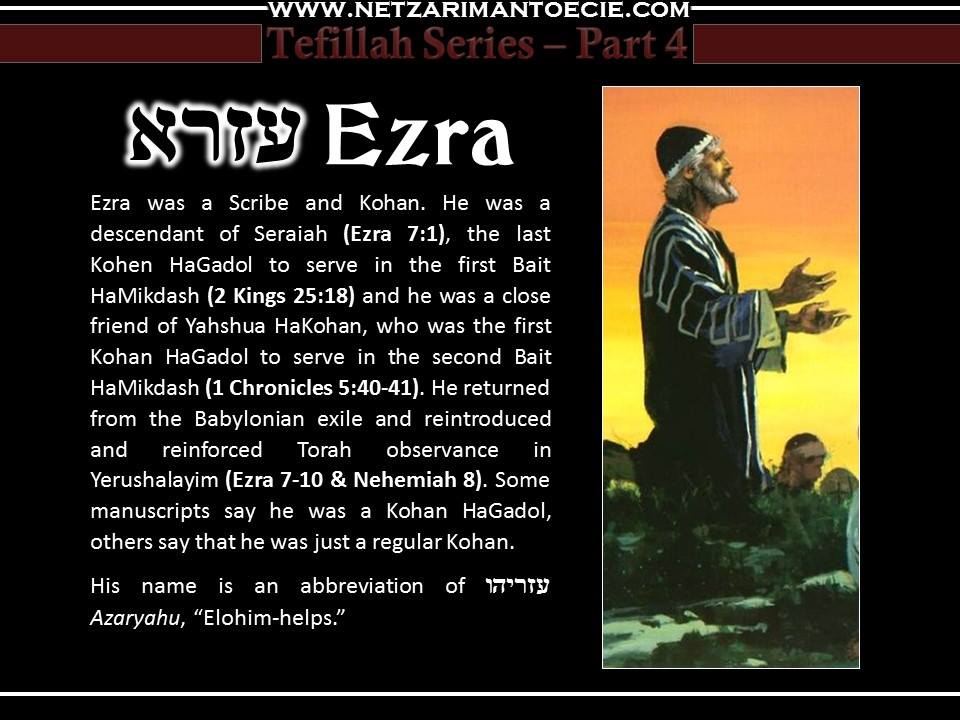
 

Ezra was a Scribe and Kohan. He was a descendant of Seraiah (Ezra 7:1), the last Kohen HaGadol to serve in the first Bait HaMikdash (2 Kings 25:18) and he was a close friend of Yahshua HaKohan, who was the first Kohan HaGadol to serve in the second Bait HaMikdash (1 Chronicles 5:40-41). Ezra was the chief driving force in reintroducing and reinforcing Torah observance in Yerushalayim after returning from the Babylonian exile (Ezra 7-10 & Nehemiah 8). Some manuscripts say he was a Kohan HaGadol, others say that he was just a regular Kohan. 

His name is an abbreviation of עזריהו‎ Azaryahu, “Elohim-helps.”

The books of Ezra and Nehemiah are interlinked. Originally, they were one scroll, but later split into two, one being called Ezra and the other Nehemiah. Nehemiah worked to rebuild the city of Yerushalayim and Ezra worked to rebuild the people. 

No other Jew in history has been as influential in structuring the format of Judaism as Ezra. 
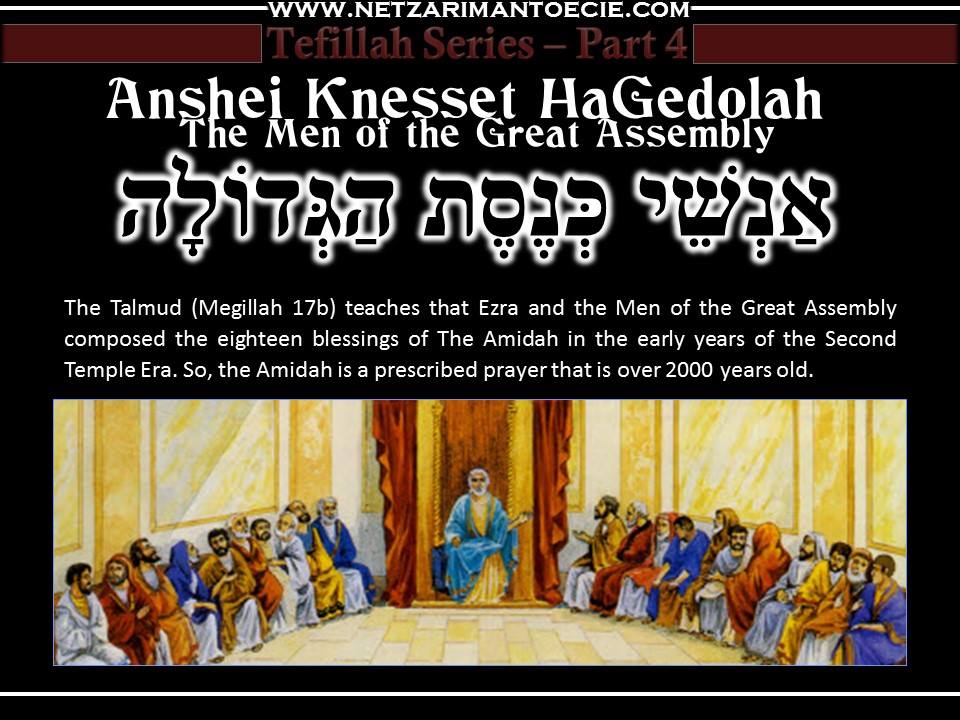
 

Ezra’s assembling of scholars and prophets to form the Great Assembly was the forerunner of the Sanhedrin, which was the authority on matters of religious law, following in the footsteps of the 70 elders ordained by Moshe Rabbeinu. The Men of the Great Assembly were credited with establishing numerous features of contemporary traditional Judaism in something like their present form, including which books would be included as “cannon” within the TaNaK, Torah Readings, the Amidah, the celebration of Purim, synagogal prayers, rituals, Kiddush, Havdalah and various other benedictions. Ezra and this council comprising 120 learned men did more to actually shape the way Torah was observed than even Rebbe Yahshua. 

The prophets Haggai, Zechariah, and Malachi were on the council and bridge the gap between the era of prophets and the Men of the Great Assembly. 

The Talmud (Megillah 17b) teaches that Ezra and the Men of the Great Assembly composed the eighteen blessings of The Amidah in the early years of the Second Temple Era. So, the Amidah is a prescribed prayer that is over 2000 years old. 

Its conception is linked to a key event in the history of Yisrael. The core of the Amidah is its strong references to redemption and the engine of redemption fully ignited only after the nation begun to audibly groan. After Moshe killed an Egyptian and the current Pharaoh died, giving rise to an even crueler one, we read, 
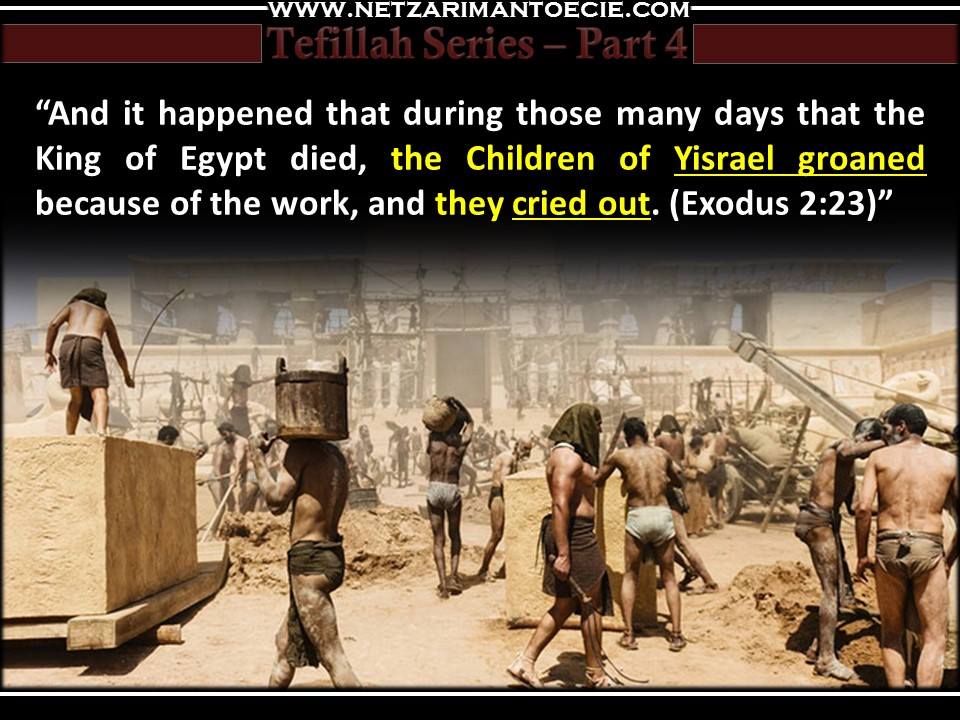
 

“And it happened that during those many days that the King of Egypt died, the Children of Yisrael groaned because of the work, and they cried out. (Exodus 2:23)” Even though Yisrael had been slaves and endured many hardships long before this point, they suffered in silence and did not pray, as words only follow understanding (binah). Yisrael had been born into slavery and up until this point, the nation had no knowledge of any other way of life. Not only were their bodies enslaved, but their power of expression was also very much enslaved. 

Moshe demonstrated that a superior lifestyle existed and the people came to recognise their pain and called out to Elohim for redemption. The redemptive process begun to take full flight only after the nation collectively recognised that there was a need. They emerged from being enslaved and silent to being a vocal people. But they were unable to clearly articulate their needs. That’s why the verse says “groan” and “cry.” But this is all Yah requires. As Rav Sha’ul (A.K.A. Apostle Paul) puts it, 


“…the Spirit helps us in our weakness. We do not know what we ought to pray for, but the Spirit himself intercedes for us through wordless groans. And he who searches our hearts knows the mind of the Spirit, because the Spirit intercedes for Elohim’s people in accordance with the will of Elohim. (Romans 8:26-27)” But, and this is a big, but, as we grew, not only as individual people in our own lives, but as a body of people that grow from generation to generation, we most move from a groan to words and from words to more meaningful words. 

Man’s challenge, therefore, is to fashion his personality, to arrange his hierarchy of values so that he can discover and identify his needs and cry out for them. The silence moves from a groan to articulate speech. 

Problem is not every believer lives on this earth in an equal set of circumstances and not everybody has the knowledge and understanding to recognise all his potential needs and articulate them clearly. 

The Men of the Great Assembly faced the very real threat of losing valuable knowledge of how to observe the Torah, with the loss of so many great men and women. Added to this the absence of the Temple service meant that something had to be done to echo its function in the daily lives of individuals.   

While the Shema is the jewel in the crown of fixed prayer, the Amidah is the crown. 

The Amidah is the most important prayer ever written. It’s no coincidence that the famous Lord’s Prayer as handed down by King Messiah Yahshua is based on the same pattern as the Amidah. So why is it deemed the most important prayer ever written?    

Imagine that one hundred and twenty of the greatest computer scientists in the world are brought together and given unlimited access to the most advanced technology available to write a program for a supercomputer designed to remain state-of-the-art for all time. They are joined by visionaries able to discern every possible requirement of the future generations of computer users. This portrayal, if it where it ever possible, is but a glimpse of the extraordinary process which culminated in the sacred and ever-powerful words of the Amidah. 


In the 5th century B.C.E., the 120 men of the Great Assembly composed the basic text of the Amidah. The exact form and order of the blessings were codified after the destruction of the Second Temple in the first century C.E. The Amidah was expanded from eighteen to nineteen blessings in the 2nd century C.E., under the leadership of Rabbi Gamliel the Elder in Yavneh. The additional blessing (against heretics) was initially meant to combat the threats posed by the Samaritan, Sadducee, and Nazarene sects of Judaism. But more on that later.
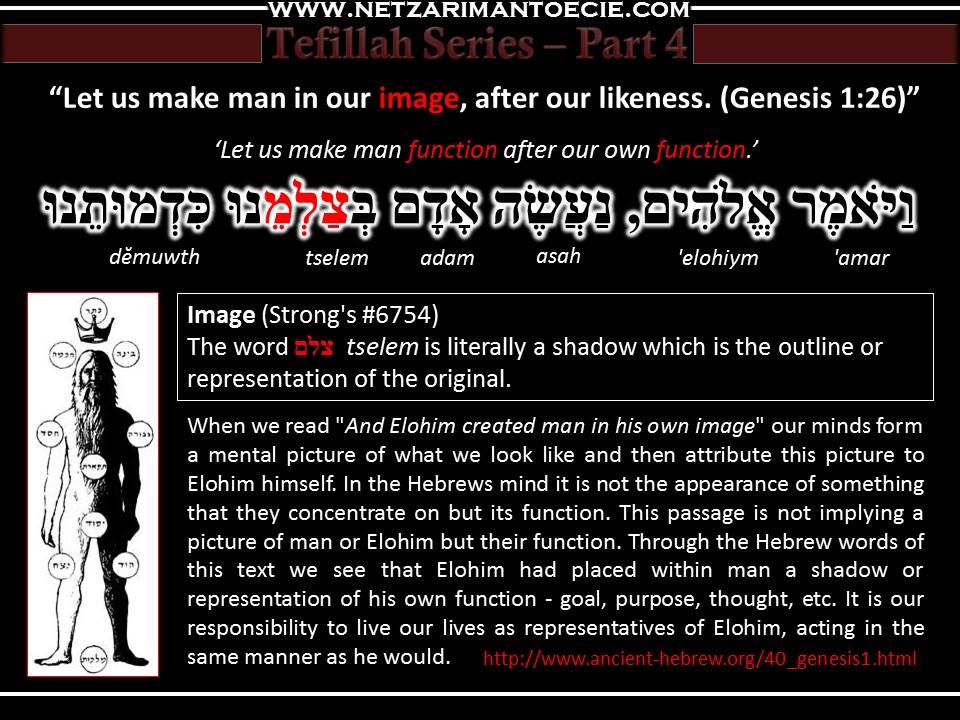
 

The Torah tells us that Yahweh declared, “Let us make man in our image, after our likeness. (Genesis 1:26)” Most Western minded people immediately think of a physical image, but the verse refers to function alone. So it is better translated as, ‘Let us make man function after our own function.’ Yahweh wants man to join him in the process of creation and development. The physical act of circumcision symbolises this unique and privileged role. 

The primary purpose of prayer is not to change Elohim, but to change us. Man cannot solve his problems or satisfy his needs alone, nor can he ignore them. Torah rejects the notion that we should suffer in silence, rather the Torah wants man to cry out to Elohim to rescue him from affliction. 

“Whoever calls in the name of Yahweh shall be saved (Acts 2:21; Romans 10:13; cf. Joel 2:32[3:5])” These verses are connected to the Torah, were it says, “Then all the peoples on earth will see that name of Yahweh is proclaimed over you, and they will fear you. (Deuteronomy 28:10)” (Click) So this means, those who have Yahweh’s name on them, evident in their collective uniform conduct. There is no such thing as disorganised religion. Where there is no order, there is anarchy. In every vocation, there needs to be leadership and structure. There needs to be a group of people that identifies clarifies and prioritises the needs of the masses. Enter the Shmoneh Esreh, introduced to us by the Men of the Great Assembly as a litany of specific requests, designed to classify every need. 

The development of a fixed prayer, moreover, allows the worshipper not only to be aware of his sundry needs – spiritual dietary, financial, emotional, and so on – but to understand how to respond to them. They must be channelled properly, toward the service of Elohim, as expressed by King Solomon, “In all your activities, know him. (Proverbs)” 


The Avinu in Brief

As Nazarenes, we have a special connection to the Avinu tefillah otherwise known as The Lord’s Prayer, but we cannot hope to appreciate this short and seemingly simplistic prayer until we delve into and understand the structure of its precursor, the Shmoneh Esreh. 

The most fascinating thing about the Lord’s Prayer, the prayer the Messiah told us to pray, is that it’s actually pretty ordinary. It carries nothing out of the ordinary than any other Jewish prayer that has ever been formulated. In fact, every aspect of it is woven from the same raw material as every other Jewish prayer that’s ever existed.  Note how it comes about in chapter 11 of Luke. 


“One day Yahshua was praying in a certain place. When he finished, one of his talmidim said to him, “Adonai, teach us to pray, just as John taught his talmidim. (Luke 11:1)” Did you notice what was said?  “…just as John taught his talmidim.” This is amazing, because it shows us a tradition of a signature prayer that was taught by rabbis to their students. What was John the Immerser’s prayer like?  We have no Scripture on John’s prayer, but we have some further interesting information that confirms a tradition of prayer that was observed across sects of Judaism.  (Click) “They said to him, ‘John’s talmidim often fast and pray, and so do the talmidim of the Pharisees, but yours go on eating and drinking. (Luke 5:33)’” Author and Messianic teacher Aaron Eby says that there is nothing in the Avinu that would make it uncomfortable for a Jew to pray outside the fact that it’s so centre within Christianity. All its components are derived and patterned after Jewish prayer and it has nothing in it that makes it particularly distinctive in any way. 
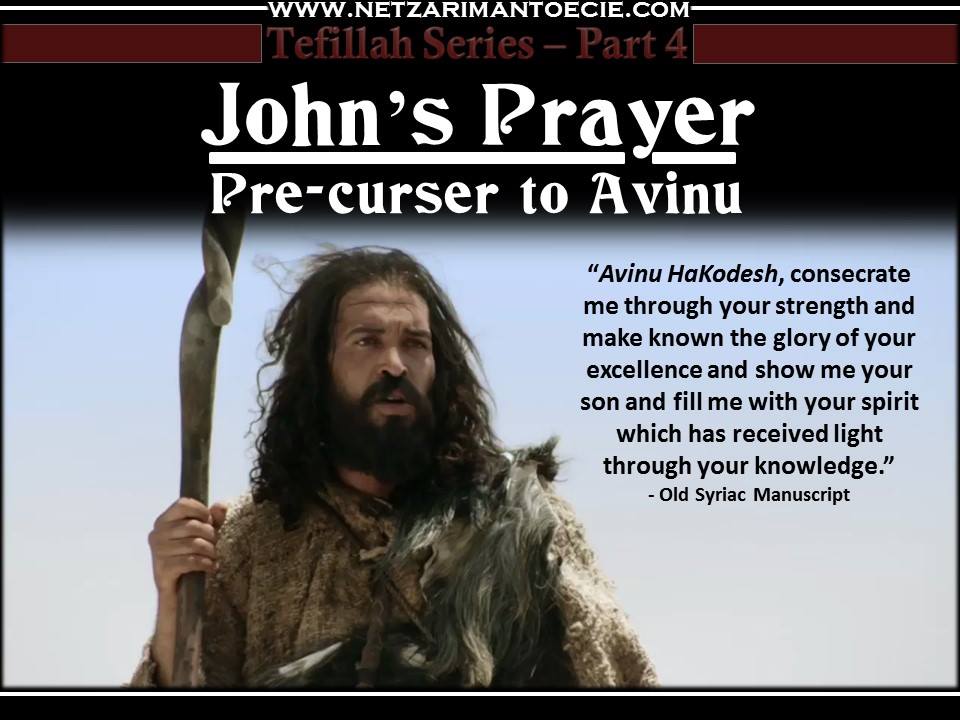
 

For those of you curious about the prayer that John may have taught. This is what I managed to find. This is from an old Syriac manuscripts contains a possible rendering of John’s prayer. It reads: “Holy Father, consecrate me through your strength and make known the glory of your excellence and show me your son and fill me with your spirit which has received light through your knowledge."


Now, the big question is this. Did Yahshua teach the Avinu as a substitute for the Amidah. The answer is no. Why? Because many great rabbis throughout history have taught original prayers to their disciples as prayers that uniquely connect them to their rabbi and at no time were any of these prayers introduced to cancel out any fixed prayer handed down from the days of Ezra. 


How to Recite the Amidah

Before we look at the Amidah itself, we must first discuss how the prayer is articulated. We recite the Amidah in an undertone. Not a whisper, but a faint voice. This is to contrast the Prophets of Ba’al who called out loudly to their Elohim, but were ignored. Now this might sound like a bit of a contradiction as indeed we are commanded to “call in the Name,” but this is not speaking about volume so much as it is about the act of calling. It was the mother of the Prophet Samuel, Channah, who first displayed the most intensity in praying in 1 Samuel 1:12-16. Channah prayed without being heard, because she was so immersed inner concentration. She even fooled a Tzaddik, who was not familiar with such a style of prayer until he saw her. “As she kept on praying to Adonai, Eli observed her mouth. Hannah was praying in her heart, and her lips were moving but her voice was not heard. Eli thought she was drunk and said to her, “How long are you going to stay drunk? Put away your wine.” “Not so, my Adon,” Hannah replied, “I am a woman who is deeply troubled. I have not been drinking wine or beer; I was pouring out my soul to Yahweh.  Do not take your servant for a wicked woman; I have been praying here out of my great anguish and grief.”


How to Stand During the Amidah

Next is posture. We are to stand if we are able throughout its entire recitation facing East. The whole Amidah can take as little as 7 minutes if read quickly and up to 30 minutes if read with slow concentration. While reciting this lofty prayer, we stand with our feet together as explained in the Talmud (in Tractate Berachos 10b). This suggests that we are like angels, whose feet are always together. (Yerushalmi Berachos 1:1) There is no more room for movement, as we are within the innermost chamber before Elohim. We have arrived. Our feet are as if together, also signifying that we have completely surrendered our sense of separate self, and we are bonded with the Eternal. (Rashba ibid.) This transformation encompasses our entire being, and a total metamorphosis takes place, of our orientation to the right (to Elohim) as well as of our orientation to the left (to the ego), both of which are now joined together, connecting with Elohim in unison. (Mabit)


Approaching the Amidah

Before we pray the the Amidah, we take three steps backward, and then three steps forward. 

This is done to enhance our concentration and stimulate greater focus. The movement forward indicates and symbolises our entry into the Creator’s innermost chamber. Thus we symbolically enter a sacred space in which we can, if we truly desire, encounter Elohim’s presence.

The number of steps is highly significant, as the three steps mimic the three steps Moshe took when he entered prayer, as he travelled past the three partitions—the darkness (choshech), the first cloud (anan) loud and the second cloud (arafel)—before he encountered the Divine.

Mentally, we should visualize ourselves moving into the Holy Land, with the first step, then into Yerushalayim/Jerusalem with the second step, and into the Temple with the third step, thus standing on the threshold of the Holy of Holies.


Bowing During the Amidah
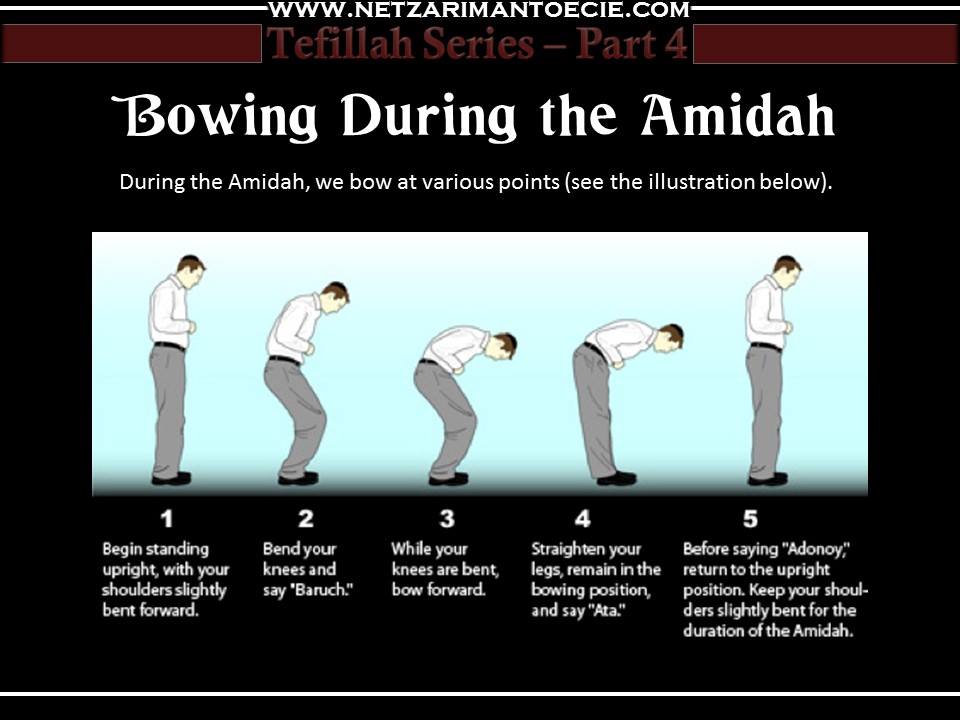
During the Amidah, we bow at various points (see the illustration above).

1. At the opening of the Avot blessing, at Baruch, bend the knees.

At the second word (Ata), bow from the waist.

At Hashem’s Name, stand erect.

2. At the end of Avot (Magen Avraham), we repeat the procedure:

At the opening Baruch, bend the knees.

At the second word (Ata), bow from the waist.

At Hashem’s Name, stand erect.


The Content of the Amidah

The Amidah is made up of various blessings. The first three blessings are praises, the middle portion are requests, and the final three blessings are thanksgiving in nature. The Talmud (Berachos 28b) teaches that this recital of eighteen blessings corresponds to the eighteen times Yahweh’s name is mentioned by King David in Psalm 29. The eighteen also draws a parallel to the eighteen times our forefathers are mentioned together in the Torah.
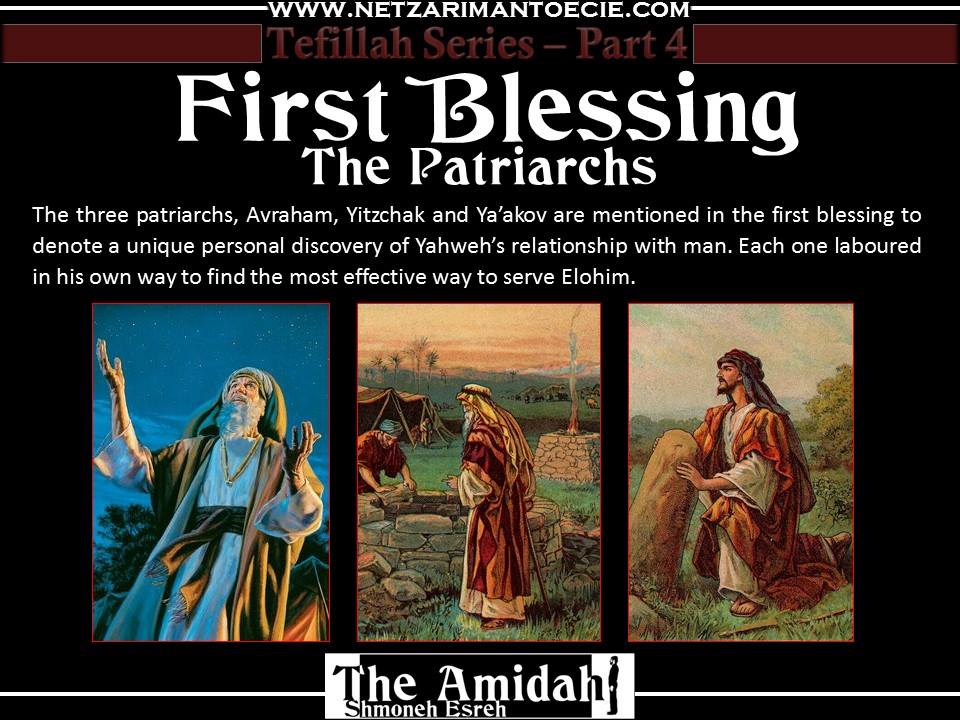
 

1st Blessing - The three patriarchs, Avraham, Yitzchak and Ya’akov are mentioned in the first blessing to denote a unique personal discovery of Yahweh’s relationship with man. Each one laboured in his own way to find the most effective way to serve Elohim. Avraham represents kindness, Yitzhak, introspection and Ya’akov, the pursuit of truth. 


2nd Blessing – Elohim’s Might – This blessing expresses Yahweh’s unique might by describing miracles that can only be attributed to Him alone, such as His ability to resurrect, destroy life and Create life. 

3rd Blessing – Elohim’s Holiness - In the Kuzari, a classic medieval work by Rabbi Yehuda HaLevi, he classifies creation into five groups: inanimate objects, vegetation, animals, man, and the Nation of Yisrael. Yisrael reside at the top of the chain, because at Mount Sinai, Elohim designated us “a kingdom of Kohanim and a Kadosh nation. (Exodus 19:6)” The nation od Yisrael was chosen to lead the world to understand and comprehend Yahweh’s mission. We do this being imparting sanctity in all we do. The declaration that “You are holy” communicates our readiness to sacrifice all, even our lives if need be, to sanctify Elohim’s Name.
 

4th Blessing – Sekel, intelligence is the essence of what makes us human and we must recognise that our intelligence comes from Yahweh. For one to accept a gift and misuse it is the ultimate ingratitude; therefore, we must not channel our intelligence toward areas of study and endeavours that are devoid of holiness or immoral or unethical. 

We are essentially praying that we correctly understand situations and information. The Torah is expansive and intricate and often difficult to penetrate and to retain. We mention the concept of da’at (knowledge) during Havdalah, because without it, we could not discern between Shabbat and weekdays.  
 

5th Blessing – T’shuvah. Once we understand correctly, we then are moved to acknowledge our own inadequacies. 
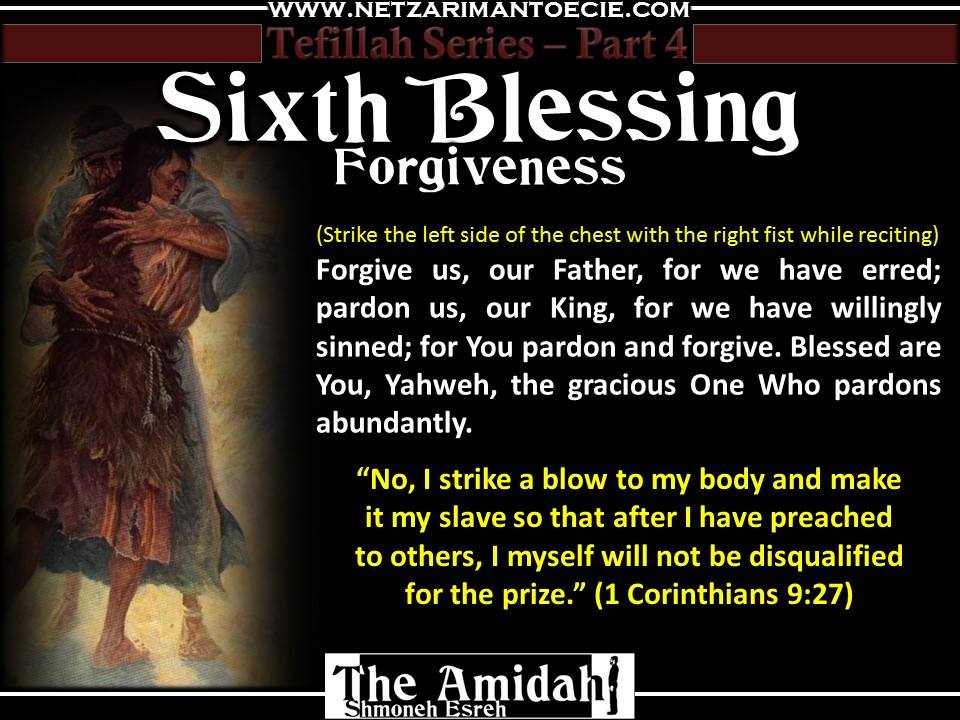
 

6th Blessing – Forgiveness (Strike the left side of the chest with the right fist while reciting) Forgive us, our Father, for we have erred; pardon us, our King, for we have willingly sinned; for You pardon and forgive. Blessed are You, Yahweh, the gracious One Who pardons abundantly. 
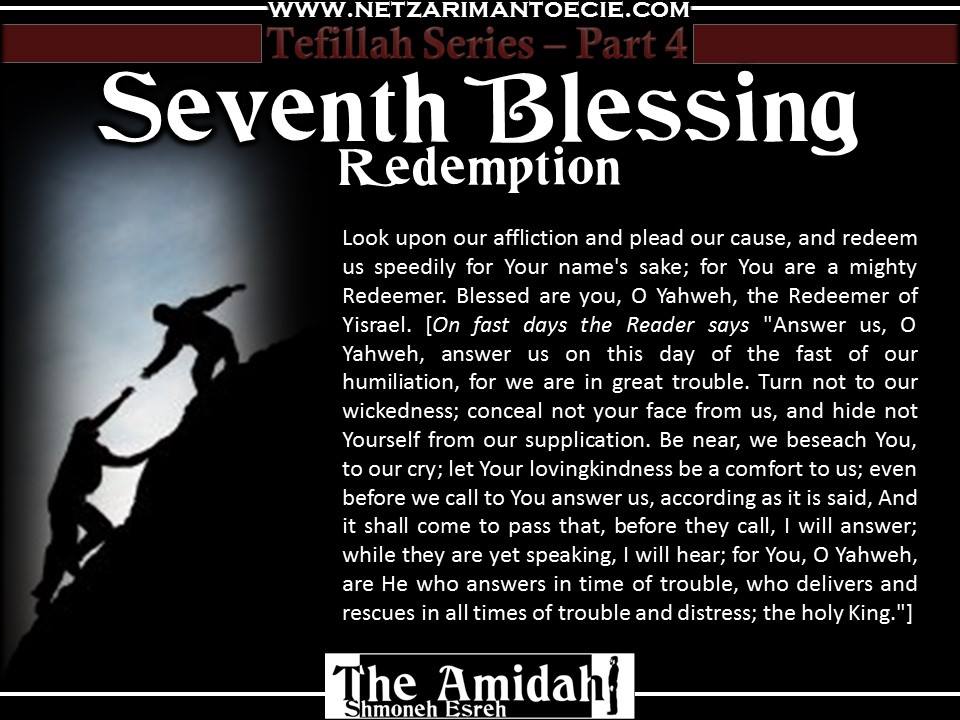
 

7th Blessing – Redemption – Often the various difficulties we experience in this world emanate from our inappropriate actions and sins. After doing t’shuva and asking for forgiveness, we now ask for the difficult situations in our lives to be reversed.

Behold our affliction and take up our grievance, and redeem us speedily for Your Name sake, for you are a powerful Redeemer. Blessed are you, Yahweh, redeemer of Yisrael. 


8th Blessing – Health & Healing – Often people only pay attention to their health when specific ailments appear and only then do they realise how fortunate they had been to be blessed with good health, enabling them to function. 

A doctor may treat two patients for the same ailment using the same medication, yet one will be cured and the other will succumb to the disease. In the former case, Yahweh decreed that he be cured and the latter, not. The blessing of healing comes at the eighth stanza, because the mitzvah for circumcision occurs on the eighth day. Seven corresponds to the natural world, but the number eight, the eighth day corresponds to circumstances that are beyond the realm of the norm. So we request that Yahweh go beyond normal physical limitations to heal.  


9th Blessing - Prosperity


PDF Downloads

PDF with slides
PDF No slides

If this teaching or any other teachings have been a blessing to you please consider our congregation for donations and offerings.
All our teachings are free and as such rely on the generosity of our community.

Thanking you from Nazarenes of Australia.


Donations

Comment

Omer Count Revival - From Doubt to Confidence

Comment

Omer Count Revival - From Doubt to Confidence

Video Teaching


Audio Teaching (Downloadable)


Study Notes and Slides

From Doubt to Confidence

Introduction: As we come into this period called “Seferit Ha Omer” or the Counting of the Omer it is to our benefit to consider how the Sh’lichiym (the Apostles) began in doubt and were finally transformed to prepare them for the outpouring of the Ruach Ha Kodesh (the Holy Spirit) at Shavuot. (Pentecost) It was uniquely this period of time that prepared them to become a powerful force from Shavuot (Pentecost) in the hand of Yahweh. This is not only a journey that they went on but it is one that Yisrael also journeyed, on their way to Sinai to receive the Torah . It is also one that we should desire to embark on that we may be fully committed both in character and purpose as we lead up to Shavuot (Pentecost). Fortunately we have the benefit of our 49 steps booklet to instruct us how to achieve this phase of development but merely reading through these portions will not be sufficient and so we need to truly willingly apply these to our lives by beginning to judge ourselves in all honesty. It is my desire that we observe the journey the Talmidim (Disciples) needed to go through for them to be prepared for the giving of the Ruach Ha Kodesh (the Holy Spirit) on Shavuot (Pentecost). 

Understanding the Hebrew mindset of the Mashiach:

In the Hebrew mind the concept of the Messiah has traditionally be different from what we have grown up with and we get that from modern Judaism which speaks this way of the Mashiach:

Judaism 101- http://www.jewfaq.org/mashiach.htm

The “mashiach” will be a great political leader descended from King David:

YermeYahu (Jeremiah) 23:5 “Behold, the days are coming,” says YHWH (the Lord), “That I will raise to David a Branch of righteousness; A King shall reign and prosper, and execute judgment and righteousness in the earth.

Judaism says that he will be a charismatic leader, inspiring others to follow his example. He will be a great military leader, who will win battles for Yisrael. He will be a great judge, who makes righteous decisions. But above all, he will be a human being.

This must have been the same pattern of thought that obstructed the Talmidim (Disciples) when Yahshua spoke often times about his subsequent suffering which they constantly did not understand since they thought he would resurrect the Kingdom of Yisrael to a new level of Esteem that was long hoped for. We see in the following an example that they may have hoped was the beginning of their expectation:


MattithYahu (Matthew) 16:28 “Truly I say to you, some who are standing here will not taste death before they see the Son of Man coming in his kingdom.” 

Surely these words only reinforced the Disciples expectations of the long awaited Kingdom. To further see how their thoughts were revealed we continue to read:

MattithYahu (Matthew) 17:1 After six days Yahshua took Kepha (Peter), Ya’acov (James) and Yochanan (John) his brother, and led them up a high mountain. 2 There he was transfigured before them. His face shone like the sun, and his garments became as white as the light. 3 Just then there appeared before them Mosheh (Moses) and Eliyahu (Elijah), talking with him. 4 Kepha (Peter) said to Yahshua, “Master, it is good for us to be here! If you will, let us make three Sukkot (Tabernacles) here—one for you, one for Mosheh (Moses) and one for Eliyahu (Elijah).”

It is suggested that this time was approaching Sukkot (the feast of Tabernacles) and so these Talmidim (Disciples) thought that the Kingdom was about to be announced but at the Crucifixion all of them became confused & fearful when their expectations of the Kingdom were not realized. 

It is with this thought that we come to the time after the Master Yahshua was crucified with the Talmidim (Disciples) in disarray and huddled together behind locked doors for fear of the Religious leaders.

Thomas is not alone in his Doubts:

So often doubt has been unduly attributed to the character of Toma (Thomas)  though when we read the account of the women telling the Disciples that they had seen the Master their response was, in reality not any better than Toma (Thomas):

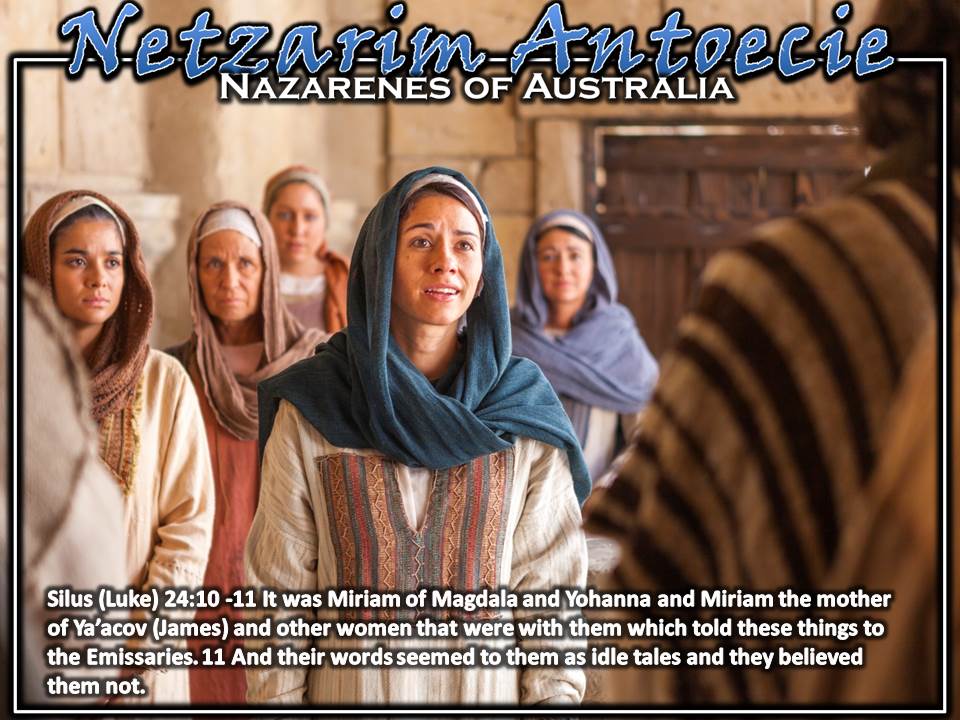
Silus (Luke) 24:10-11 It was Miriam of Magdala and Yohanna and Miriam the mother of Ya’acov (James) and other women that were with them which told these things to the Emissaries. 11 And their words seemed to them as idle tales and they believed them not. 

When we consider these words we come to the conclusion that a resurrected Master was so distant from their thoughts that they totally dismissed it though he had spoken often of it but their minds remained closed. 

To understand Toma (Thomas) the person, we need to look at verses that reveal something about him. Why could he not believe by the testimony of the other disciples? This drama confronts many today when they face traumatic experiences in their lives. What we find of Toma (Thomas) is that he tended to be rather pessimistic but he was also passionately loyal as we read his response when Yahshua hears about Eli’ezer known by most as (Lazarus) and desires to go to Beyth Anya (Bethany) which is near Yerushalayim (Jerusalem) knowing the Yahudi (Jewish) leaders were seeking his arrest:

Yochanan (John) 11:16 Then said Toma (Thomas) who is called the twin, to his fellow disciples, “Let us go, that we may die with him”.

We get a glimpse of the character through this verse and we come to see that the Scriptures tell us that at the arrest of Yahshua all the Disciples fled, so his desertion of his master must have hit him very hard. Unlike the other Disciples who came together in fear to comfort one another we see no sign of Toma (Thomas). Why was he not there? Is it possible that he was so shattered first by his failure to stand for his beloved Master and also because the rare glimpse we have of him reveals him being quite pessimistic so it is possible that he simply needed to be alone to wallow in his own sorrow!

Finally after 8 days Toma (Thomas) gathers with the other Talmidim (Disciples) and his doubts stemming from his deep pessimistic emotions emerge:

Yochanan (John) 20:25 The other disciples therefore said to him, “We have seen the Master.” So he said to them, “Unless I see in His hands the print of the nails, and put my finger into the print of the nails, and thrust my hand into His side, I will not believe.” 

As we examine the nature of all these Talmidim (Disciples) who by then are a far cry from being Sh’lichiym (Sent Ones) that could spread the Besorah (the Good News) we might wonder how it was possible for them to fulfil their high calling that the Master had called them to. It is amazing that just as Yisrael after being delivered from Mitzrayim (Egypt) after seeing all the miracles often displayed doubts & unbelief and so had a hard journey during the same period of time to prepare them to receive YHWH’s divine Torah (Covenant Words) so too did the Disciples require that period to prepare them for the promise of the Father. They truly needed this time to develop their faith so they could say words like this with absolute conviction:

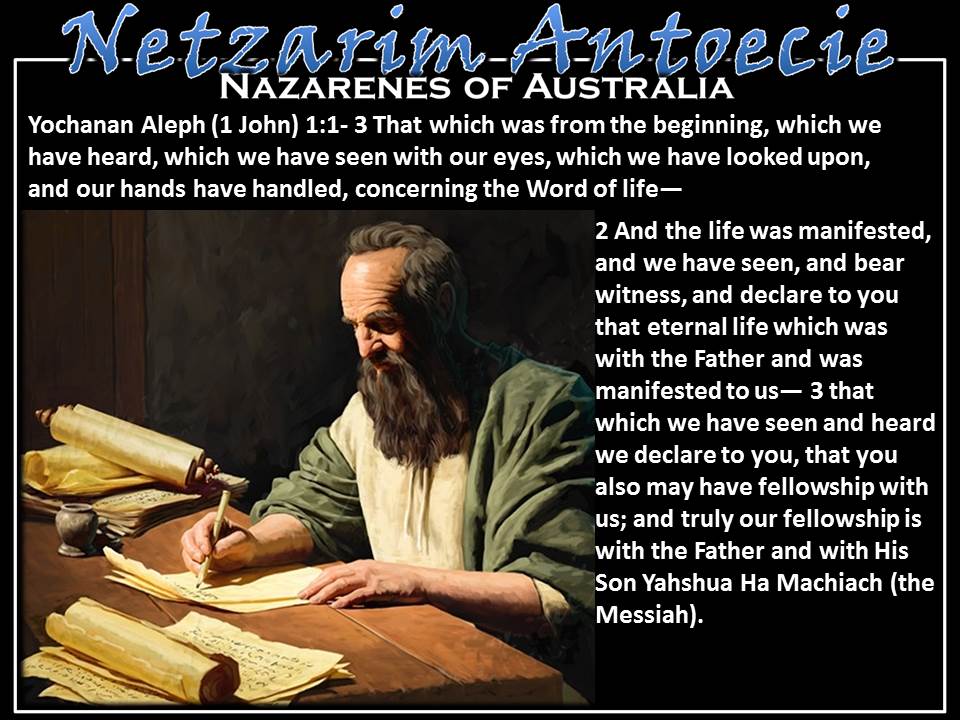
Yochanan Aleph (1 John) 1:1- 3 That which was from the beginning, which we have heard, which we have seen with our eyes, which we have looked upon, and our hands have handled, concerning the Word of life— 2 And the life was manifested, and we have seen, and bear witness, and declare to you that eternal life which was with the Father and was manifested to us— 3 that which we have seen and heard we declare to you, that you also may have fellowship with us; and truly our fellowship is with the Father and with His Son Yahshua Ha Machiach (the Messiah).

This time of the counting of the Omer becomes therefore a critical time each year where we continue to weed out areas of our character symbolic of Leven that is detrimental to the purpose for which we are called that we may become that Echad (Unified) Assembly that YHWH desires:

The Great Turning Point for Toma (Thomas) 

It is the encounter that happens 8 days later that sets Toma (Thomas) apart from even his Brethren for his words reveal the true depth of his conviction which appears greater than anything shown by any of the other Talmidim (Disciples):

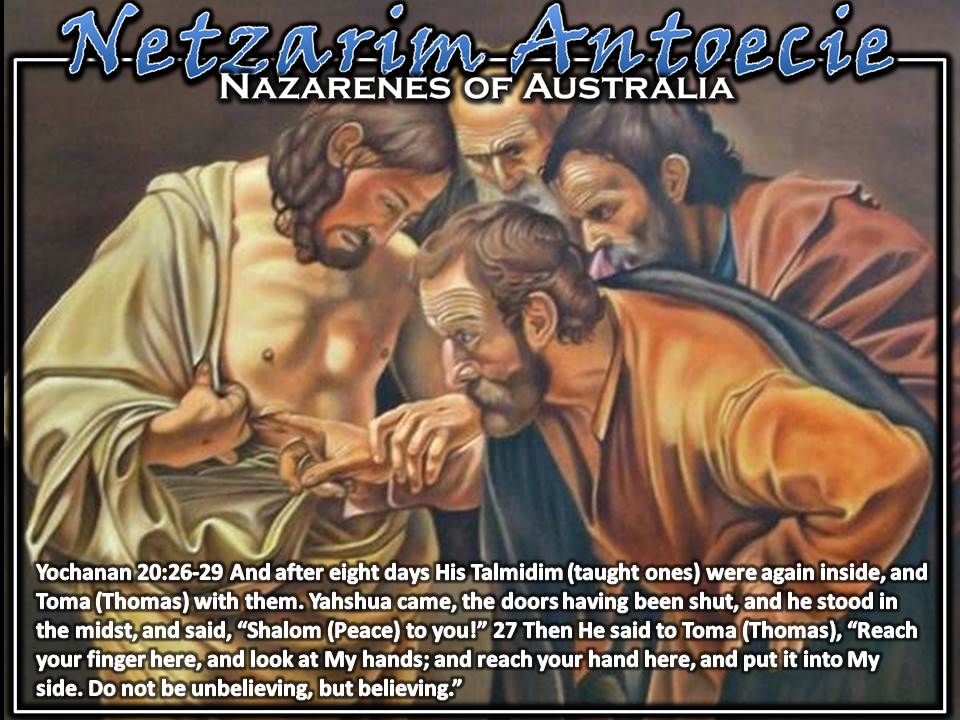
Yochanan (John) 20:26-29 And after eight days His Talmidim (taught ones) were again inside, and Toma (Thomas) with them. Yahshua came, the doors having been shut, and he stood in the midst, and said, “Shalom (Peace) to you!” 27 Then He said to Toma (Thomas), “Reach your finger here, and look at My hands; and reach your hand here, and put it into My side. Do not be unbelieving, but believing.”

This was surely the turning point for Toma for his doubts suddenly evaporated and his faith and confidence never again waivered for we read his great response:

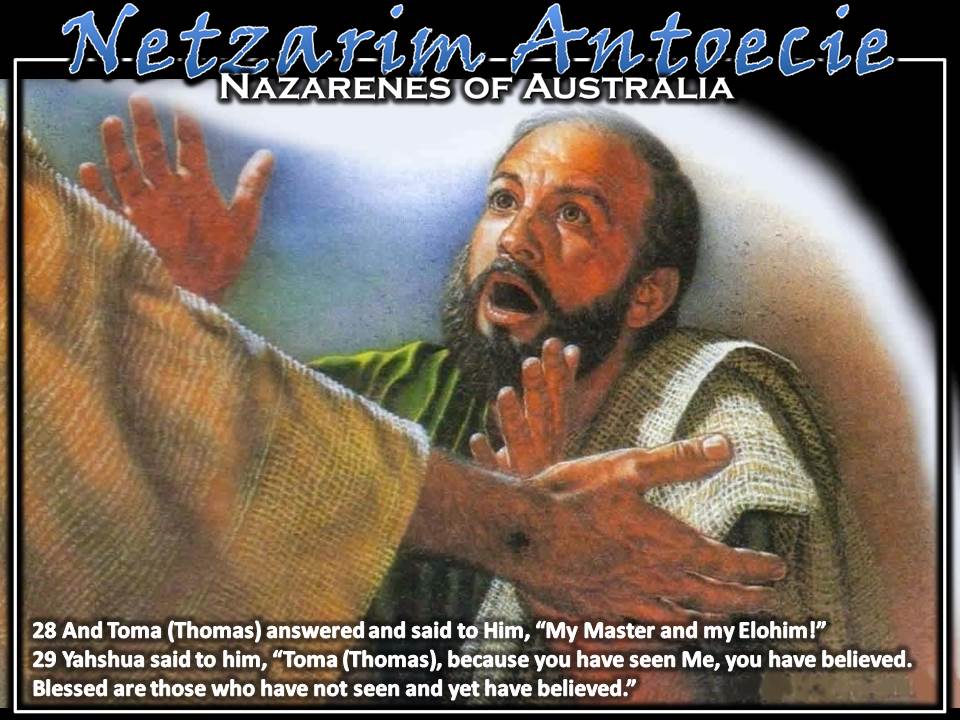
Yochanan (John) 20: 28 And Toma (Thomas) answered and said to Him, “My Master and my Elohim!”29 Yahshua said to him, “Toma (Thomas), because you have seen Me, you have believed. Blessed are those who have not seen and yet have believed.”

We are however all certain that these Talmidim (Disciples) all engaged in the process of counting the Omer and surely understood its significance in developing the character that would prepare them for receiving the promise of the Father. 

The Purpose of the Appearances:

Since we understand the difficulties the Disciples went through in dealing with the death of their Master whom they thought would establish the Kingdom, his appearances after the resurrection played a vital role in preparing them to bring the message to the World. We read in the following the vital reason for his appearance.

Silus (Luke) 24: 44 And He (Yahshua) said to them “these are the words I spoke to you while I was still with you that all things must be fulfilled which were written in the Torah of Mosheh (Moses) and in the Naviim (prophets) and in the Tehillim (Psalms) concerning me. 45 Then he opened their understanding, that they might understand the Scrolls of YHWH. 46 And said to them, this is how it is written, Messiah to suffer and to rise from the dead the third day 47 And that repentance and remission of sin should be preached in his name among all Nations beginning at Yerushalayim (Jerusalem) 48 And you are witnesses of these things. 

In this beginning of the journey to Shavuot (Pentecost) the witness of the Resurrected Saviour was so overwhelming but to dispel any concern as to his physical resurrection Yahshua even demonstrated that he had all the faculties of a normal human that no doubt could remain in any of his taught ones that he had been raised from the dead and was indeed flesh and blood:

Silus (Luke) 24:41 And while they were still not believing for joy and wondered, he said to them,” have you any food? 42 And they gave him a piece of broiled fish and of a honeycomb. 43 And he took it and ate before them. 

To inspire overwhelming confidence in the Resurrection the Biblical evidence of Yahshua’s appearances are included:

These Post Resurrection appearances of Yahshua are: 

1. To Miriam- (Yochanan 20:16) 

2. To the other Women- (MatithYahu 28:9) 

3. On the road to Emmaus- (Luke 24:13-30) 

4. To Shimon Kepha (Peter)- ( Luke 24:34, 1 Cor 15:5) 

5. To the 10 Talmidim (taught ones)- (Luke 24:36) 

6. To the Disciples with Toma (Thomas)- (Yochanan 20:24-29) 

7. by the Lake of Galil- (Yochanan 21) 

8. On the Mountain in Galil appointed by the Master- (Mk 16:19) 

9. To Ya’acov (James)- (1 Cor 15:7) 

10. To the 500 that Shaul (Paul) speaks of- (1 Cor 15:6)  

These appearances speak volumes of give them and us overwhelming proof of the Resurrection to empower these doubtful Talmidim (taught ones) and us to take the journey of Counting the Omer with renewed strength and purpose and confidence in the Truth. 

The Sequence of the Post Resurrection Days

The sequence of days has been in dispute often but since the earliest instruction from the Malakim (Angels) to the women was as we read some conclusions can be drawn: 

Mark 16:7 And go say to his taught ones and Kepha (Peter) that he (Yahshua) is going before you into Galil. You shall see him there as he said to you. 

This is also repeated in Mattithyahu (Matthew) 28:7 and since we read in Mark that the Eleven went away to Galil a distance of about 100 kms we can faithfully assume they went after the appearance with Toma. From this information I would like to postulate that the appearance on the seashore at Galil and the subsequent instruction on the Mount at Galil was not in the latter part of the forty days before the Ascension but rather early leading to their return to Yerushalayim (Jerusalem) to fulfil the counting of the Omer with new vitality and purpose. 

Also what is of interest is that MattithYahu (Matthew) concludes with Yahshua appearing on the mount in Galil (Galilee).

Mark however concludes with the direction to go to Galil and the first appearance with the disciples.

Luke however seems to conclude with the first appearance blended with his last appearance since Yahshua tells them not to depart from Yerushalayim (Jerusalem). 

Yochanan (John) concludes with Yahshua’s appearance by the sea of Tiberius or the Lake of Galil (Galilee).   

The Words of Yahshua to Toma: 

When Yahshua says at his appearance to Toma gathered with the Disciples that “blessed are those that have not seen yet believed” the point was not to say that it is any easier for those but rather to challenge us on how passionate we are to transform ourselves to be like these disciples in preparing for the great day that awaited them with the outpouring of the Ruach Ha Kodesh (the Holy Spirit). Are we preparing in expectancy of renewed empowerment by the Ruach Ha Kodesh (the Holy Spirit) and with a deep desire for change with all our strength or are we just doing our 49 Steps just to feel good that we have done what is expected. Therefore, is there a true hunger and a desire to receive more of Yahweh through his Ruach. If not, then will anything change?  

Now returning to Toma (Thomas) again an extremely interesting fact is that we have more information about Toma (Thomas) than any of the Sh’lichiym (sent ones) apart from Kepha (Peter) and Shaul (Paul). There are traditions of Toma leaving his doubts behind and departing Yerushalayim (Jerusalem) passing through Babylon and Persia and making an impact with the good news of Yahshua as far as the southern regions of India. Various versions of the death of Toma have him running afoul to the Hindu Priests who envied his success and rejected his message. His tomb however can still be visited in Mylapore (Meliapore) India. 

Toma as is reported was tortured by the natives of Calamina, thrown into an oven and stuck through with spears in about AD 70.  

The underlying need for Preparation:

With all this great revelation of the Resurrection of Yahshua one may wonder why a period of preparation was necessary. We know from the Pre-Pesach Fellowship Meal that the Disciples were still debating who was the greatest and from the women at the Resurrection they were instructed to meet Yahshua on the mount appointed by him in Galil for his instruction.

Surely it was not enough to just count the Omer and then appear at the Shavuot (Pentecost) feast but we come to understand that Yahshua needed them to be an Echad (unified) body with the same heart & mind to truly receive the Torah of YHWH imparted by the Ruach Ha Kodesh (the Holy Spirit) on humble hearts. And so it is with us! 

Summary Points

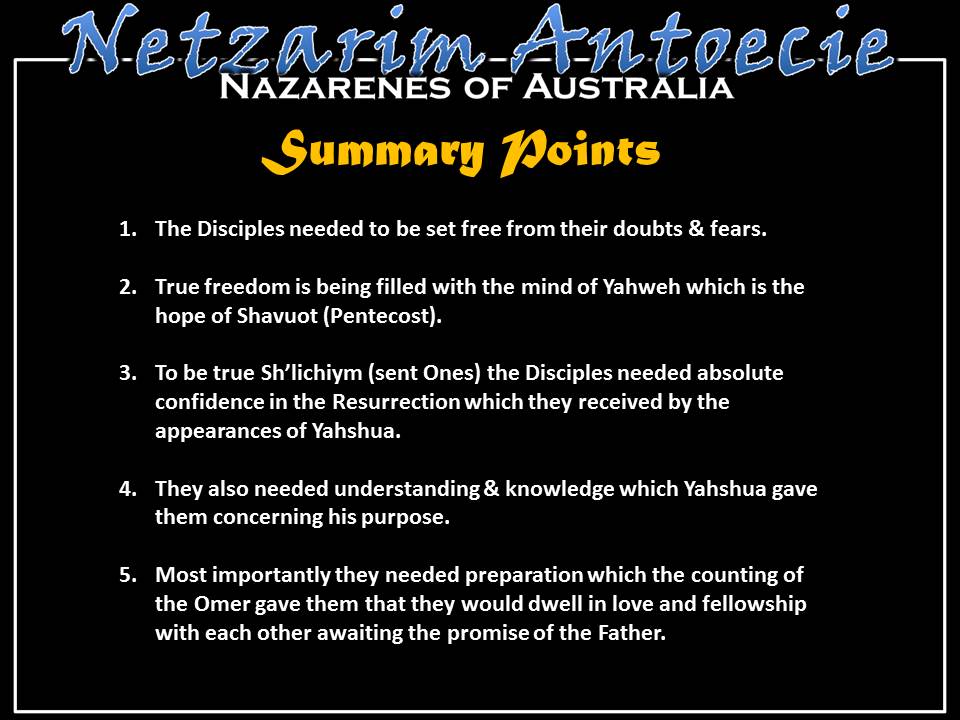
  1. These Talmidim (Disciples) needed to be set free from their doubts & fears so they could be instruments for the good news of Yahshua. 


  1. True freedom is not when you begin keeping the Commandments. If it was then our Forefathers did not need Yahshua. I am sure they kept the commandments better than us. The orthodox do a great job at doing the list of Mitzvot (Commandments). True freedom is being filled with the mind of Yahweh through the Ruach Ha Kodesh (the Holy Spirit) which would become the power of Shavuot (Pentecost).


  1. To be true Sh’lichiym (sent Ones) the Disciples needed absolute confidence in the Resurrection which they received by the appearances of Yahshua.


  1. They also needed “Binah” understanding and “Da’ath” Knowledge which Yahshua gave them concerning his purpose.


  1. Most importantly they needed preparation which the counting of the Omer gave them that they would dwell in love and fellowship with each other awaiting the promise of the Father. 

Conclusion: 

I am hoping that from this teaching we come to see that for us to be prepared to really receive the Ruach Ha Kodesh (the Holy Spirit) there truly needs to be a work of refinement. We need to judge ourselves and not others and challenge ourselves in many areas that have caused problems among the Brethren. Developing “binah” understanding & “da’ath” knowledge is greatly necessary but like with the Talmidim (Disciples) those characteristics needed to be tempered with the features that we endeavour to produce as we diligently apply ourselves to our 49 steps booklet leading up to Shavuot (Pentecost) in the great hope of exploring new dimensions of the Ruach Ha Kodesh (the Holy Spirit) that will enhance our experience with Yahweh and with the Body of Messiah. That includes those not totally acquainted with our full understanding that through our witness they may experience what we have which is ultimately why Yahshua at the pre- Pesach (Passover) meal said this: 

Yochanan (John) 13:34- 35 A renewed commandment I give to you, that you love one another; as I have loved you, that you also love one another. By this shall all men know that you are My disciples, if you have love for one another.” 


PDF with Slides
PDF no slides

If this teaching or any other teachings have been a blessing to you please consider our congregation for donations and offerings.
All our teachings are free and as such rely on the generosity of our community.

Thanking you from Nazarenes of Australia.

Donations

Comment

The Mystery of the Mt. of Olives

Comment

The Mystery of the Mt. of Olives

Video Teaching


Audio (Downloadable)


Study Notes and Slides

The Mystery of the Mt. of Olives

Introduction: As we draw near to the Celebration of Passover I desire that we understand that the real struggle that Yahshua faced, began and was won not when he was nailed to the Tree as the perfect sacrificial Lamb of YHWH but was in the Garden called Gethsemane. This garden was situated on what is called the Mount of Olives so today as a preparation for Passover I wish to explore why this mount was and is so significant and what it represents.

The Place of the Master’s greatest Test:

Yahshua often spoke to his Talmidim (Disciples) of the purpose he was sent into the World but since he had come in the form of human flesh he still faced a great struggle in the Garden that is known as Gethsemane or in Hebrew Gat Sh’manim meaning “Oil Press” on the Mount of Olives. We read in Luke 22:39 that Yahshua often went to this garden with his disciples to pray. This night however was unique and painful as we read:

Mark 14: 33 And Yahshua took Kepha (Peter), Ya’acov (James) and Yochanan (John) with him and he began to be troubled and deeply distressed.34 Then he said to them, “My soul is exceedingly sorrowful even to death.  

The anguish of Yahshua had nothing to do with fear of men or the physical torments of the execution tree because we read at the last Supper the desire he had to fulfil his purpose for coming in accord with the will of his Father so when they are at table for the last Supper he declares his intent as we read in:

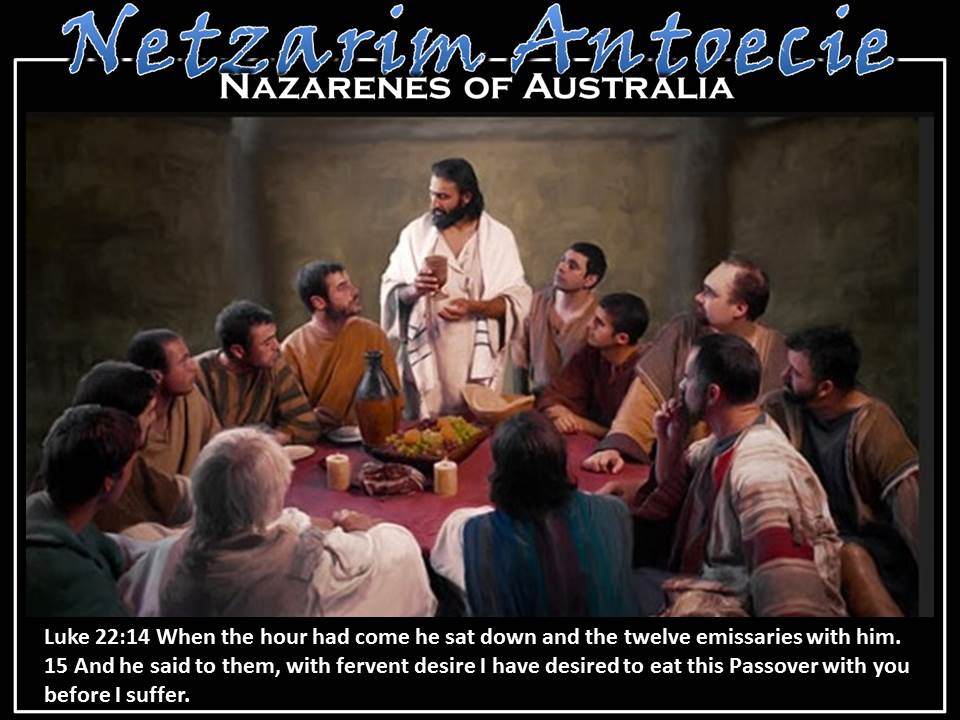
Luke 22:14 When the hour had come he sat down and the twelve emissaries with him. 15 And he said to them, with fervent desire I have desired to eat this Passover with you before I suffer. 

The great anguish that he came to experience in the Gardenwas that within hours the full cup of Divine fury against sin would be his to drink and his anguish reflected the extreme bitterness of the cup of wrath he was given. Nothing exemplifies this better than the words he cries out from the tree:

MattithYahu (Matthew) 27: 46 And about the ninth hour Yahshua cried out with a loud voice, saying, “Ĕli, Ĕli, lemah sheḇaqtani)?” that is, “My Ĕl, My Ĕl, why have You forsaken Me?” 

 (In Hebrew- Eli Eli asav rachoq yeshuah (why are you far from rescuing me) 

It is however in Gethsemane that the struggle with his human will takes place. This is the real test as we read. In his prayer to the Father that came from a desperate soul we see his progressive defeat of his will and his total submission to the Fathers will:

MattithYahu (Matthew) 26:39 And he went a little further and fell on his face and petitioned saying, “O my Av (Father) if it be possible let this cup pass from me; nevertheless not as I will but as you will.”

The second time he goes to pray we see a greater resolve in accepting that it is the Father’s will:


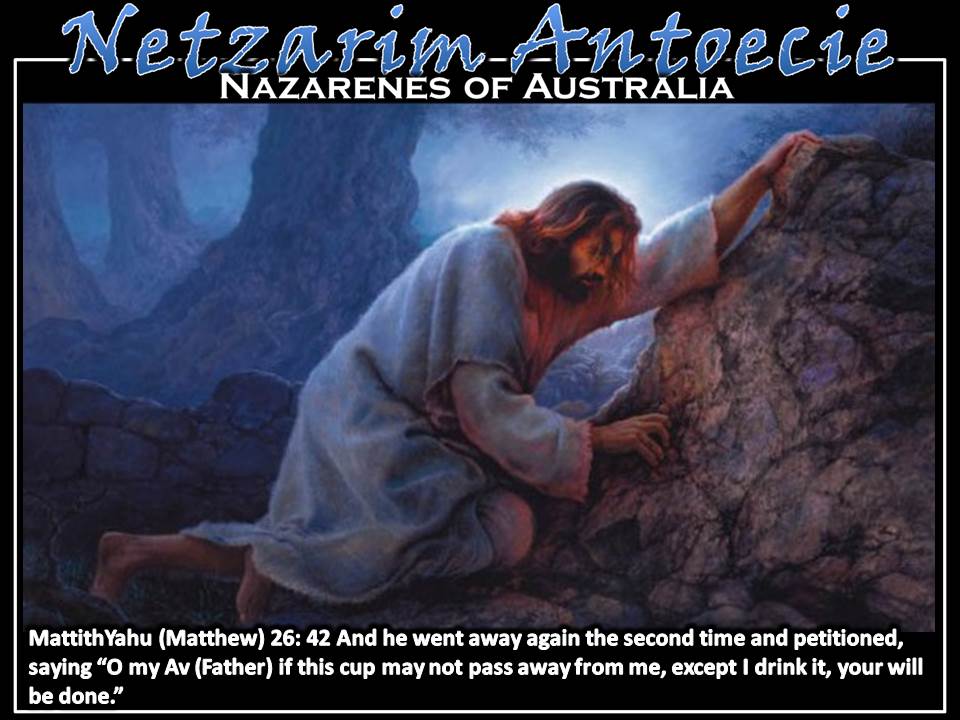
MattithYahu (Matthew) 26: 42 And he went away again the second time and petitioned, saying “O my Av (Father) if this cup may not pass away from me, except I drink it, your will be done.”

Finally after the third time we see the Master with absolute resolve ready to do the will of the Father:

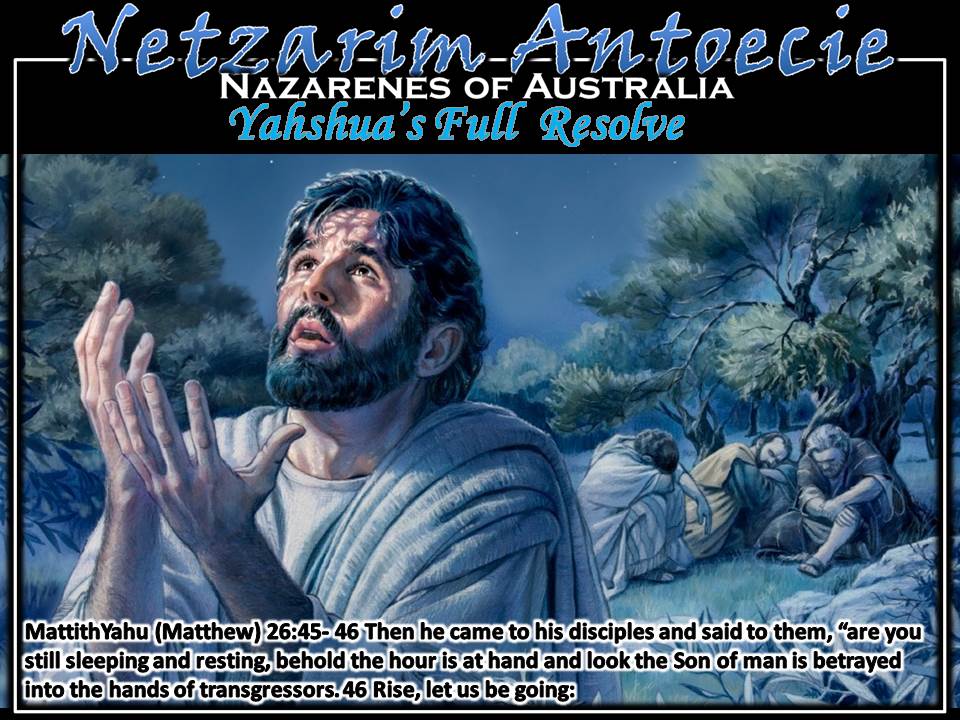
MattithYahu (Matthew) 26:45- 46 Then he came to his disciples and said to them, “are you still sleeping and resting, behold the hour is at hand and look the Son of man is betrayed into the hands of transgressors. 46 Rise let us be going: 

At the arrest however we see Kepha (Peter) so passionate to prevent the capture of his master who then tries to lop off the head of the servant of the Kohen Ha Gadol (the High Priest) but only succeeding in cutting off his ear and as Yahshua heals this man he says something that reveals what he knows of the Father for he says:

MattithYahu ( Matthew) 26: 53 Think not that I cannot petition to my Father and he shall immediately give me more than twelve legions of Malakhim (Angels).54 But how then shall the Scrolls be fulfilled that say thus it must be. 

Yahshua knew the great love of the Father that would never make him take this cup of suffering even at the expense of his own word but that great love also rested in Yahshua and therefore compelled him to go through this suffering that what was written would be fulfilled and would bring salvation to the world.

This whole episode was a prelude to his suffering but was so essential to give him the strength to go through it all for us. 

What I would now like to also investigate is whether this place, the Garden and the Mount of Olives was more than just a customary place for prayer or whether it had much greater significance.

Subtle pointing’s to the Mount of Olives  

We have a reference to this mount in Bereshith (Genesis) when Abraham built an Altar:

Bereshith (Genesis) 12:8 And he moved from there to the Mountain east of Bethel and he pitched his tent with Bethel on the west and Ai on the east; there he built an Altar to YHWH and called on the name of YHWH. 

It is evident that Abraham returned to this altar on the Mount of Olives at the time Yahweh made a covenant with him in Bereshith (Genesis) 15. “This covenant (promise) was sealed by the blood sacrifice of animals and was symbolic of the greater covenant to come -- the covenant sealed by the blood sacrifice of [YahShua] the Messiah that is available to all who put their trust in him. In making His covenant with Abraham, [Yahweh] revealed significant details of His redemptive plan for humankind, including the PLACE where the ultimate sacrifice would take place.”

The Camp of Israel’s limits had been set by the Bet Din as being an imaginary circle around the Sanctuary with a radius of 2000 cubits (Roshanah 2:5; Sanhedrin 1:5 and Shebuoth 2:2). The summit of the Mt of Olives equates to being outside this radius.

Vayikra (Leviticus) 24:14 “Take OUTSIDE THE CAMP him who has cursed; then let all who heard him lay their hands on his head, and let all the congregation stone him 

The first time we see the Mount of Olives mentioned by name in the Scriptures is when David had to flee Yerushalayim for his life because of his son Absalom. 

The High Priest Zadok moved the Ark over the Kidron because David had taken the Rod of Aaron up to the Mount of Olives to pray for deliverance. David reassured Zadok that he would keep the Rod within the 2000 cubit radius considered inside the camp (Torah Anthology Joshua pgs. 75-76).

David wept as he crossed over the Mount of Olives & While David is walking up the Summit he has an Epiphany which we read in the following:  

Tehillim (Psalms) 22 “My Elohim, My Elohim, why have You forsaken Me? Why are You so far from helping Me, and from the words of My groaning? O My Elohim, I cry in the daytime, but You do not hear; and in the night season, and am not silent… I am a worm, and no man; a reproach of men, and despised by the people. All those who see Me ridicule Me; they shoot out the lip, they shake the head, saying, "He trusted in Yahweh, let Him rescue Him; let Him deliver Him, since He delights in Him!"… They pierced My hands and My feet; I can count all My bones. They look and stare at Me. They divide My garments among them, and for My clothing they cast lots…

David was given a vision of these events and then directed by Yahweh to plant the rod, knowing it would become the instrument of redemption for all humankind. He begins to transcend time and feel the agony that will take place 1,000 years later.  Then he understands as he thrusts the Rod into the ground on the Mount of Olives just a stone’s throw away from what would be the Third Altar. 

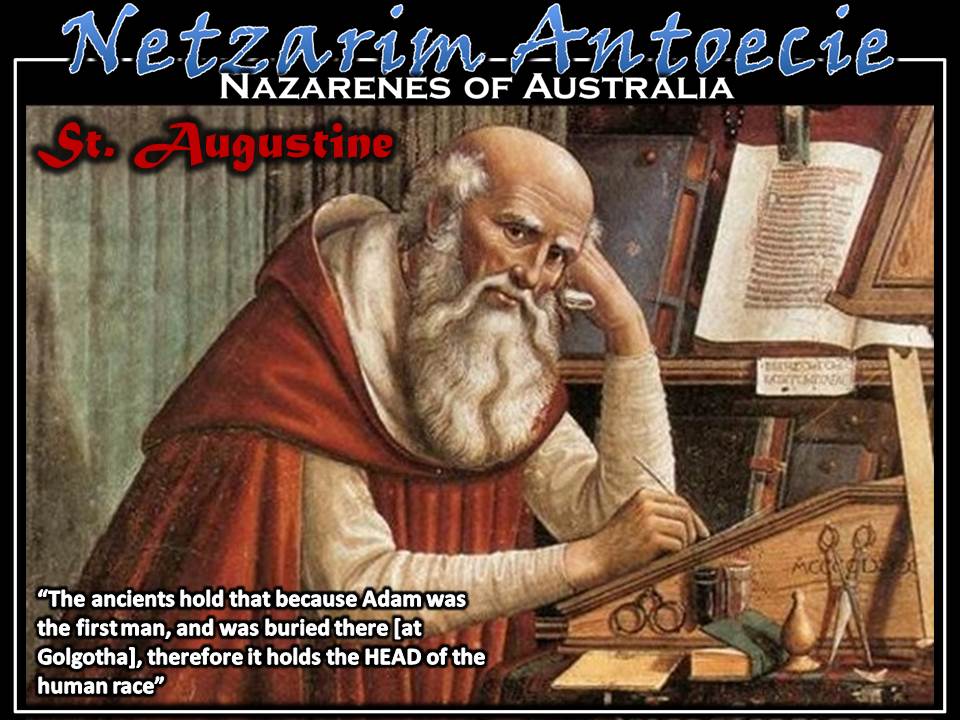
After crossing the Kidron Bridge, David followed this pathway which ascended the Mount of Olives “to ha Rosh where Yahweh was worshiped. (II Samuel 15:32)” The Hebrew words “ha Rosh” translate in most Scripture translations as “the summit.” However, these words can also be translated as “the head” or “the skull.” That Adam’s skull was buried at Gulgolet on the Mount of Olives was common knowledge. Origen speaks of it as a well-known fact in his time; and St. Augustine wrote: 

“The ancients hold that because Adam was the first man, and was buried there [at Golgotha], therefore it holds the HEAD of the human race”

Gulgolet is named from Adam’s skull, the summit of the Mount of Olives, the site of the Red Heifer altar, “the place where Yahweh was worshiped”!

Hebrews 13:11-13

 11 For the bodies of those beasts whose blood is brought into the sanctuary by the Kohen Ha Gadol (the High Priest) for transgression are burned outside the camp. 12 Therefore Yahshua also that he might set-apart the people with his own blood, suffered outside the gate. 13 Let us go forth therefore to him outside the camp bearing his reproach. 

The Tabernacle and Temple was made up of three main sections, the Holy of Holies, the Holy Place, and the Court.  It also had three altars, the Altar of Incense, the Brazen Alter of Burnt Offerings, and a third altar outside the camp.

The third Altar was located directly outside the Golden Eastern Gate over a ravine called the Wadi Kidron. Another reference pointing towards the place of Yahshua’s sacrifice comes from the Prophet who is given a word from YHWH:

YermeYahu (Jeremiah) 1:11-12…the word of Yahweh came to YermeYahu [Jeremiah], saying, "YermeYahu, what do you see?" And I said, "I see a branch of an almond tree." Then Yahweh said to me, "You have seen well, for I am ready to perform My word. 

In the Time of Rebbe YahShua, there was an arched bridge called the “Bridge of the Parah Adamah (Red Heifer) that lead from the Golden Eastern Gate across the Wadi Kidron up to the third Altar on the summit of the Mount of Olives. This causeway was called “the descent of the Mount of the Olives (Luke 19:37).”

There is no doubt that YahShua was led, like the Red Heifer, from the Temple through the Eastern gate, across the Kidron Bridge and up the ascent of the Mount of Olives to the summit. 

Hebrews 13:10 “We have an altar from which those who minister at the Tabernacle have no right to eat.”

In the Presence of YAHWEH

Now since, in the Torah, a person accused of the sin of blasphemy had to be tried, convicted, and killed in the presence of Yahweh, the only appropriate execution place was the summit of the Mount of Olives. Since Yahweh’s presence (Shekinah) resided in the Holy of Holies of the Temple, the condemned man had a clear, unobstructed view of the ONLY entrance to the Temple on its EASTERN side. Therefore, the Messiah died on the Mount of Olives facing the Temple and “in the presence of Yahweh.”

The Significance of the Mt. of Olives

Rebbe YahShua was proclaimed king [HIS CRIME] on the Mount of Olives and arrested at the garden of Gethsemane on the Mount of Olives. The Mount of Olives was the place of his arrest. Golgotha (the place of the head) was on the Mount of Olives near the place where the bodies of sacrificed Temple animals were burned. This steep slope on the Mount of Olives east of the Temple was outside the east gate of the city of Yerushalayim (Jerusalem) and fits all Scriptural evidence for the location of the crucifixion. It must be noted that all the Temple walls were high except the eastern wall because the High Priest that burns the Red Heifer and stands on the top of the Mount of Olives should be able to look directly into the entrance of the Sanctuary when the blood of the heifer is sprinkled. (Talmud Middot 2:4)”

     It was here at the summit of the Mount of Olives that stood a miraculously budding branch of an almond tree, called A’aron's rod, planted on the Mount of Olives by David and grew into the crucifixion tree.  It was here that our Messiah was nailed on a cross beam in the midst of two Zealots.  King Messiah YahShua became the fruit of the Tree of Life.

We also know that according to Scripture that the Mount of Olives plays a major role in the Return of Yahshua as the coming Moshiach (Messiah since we read in:

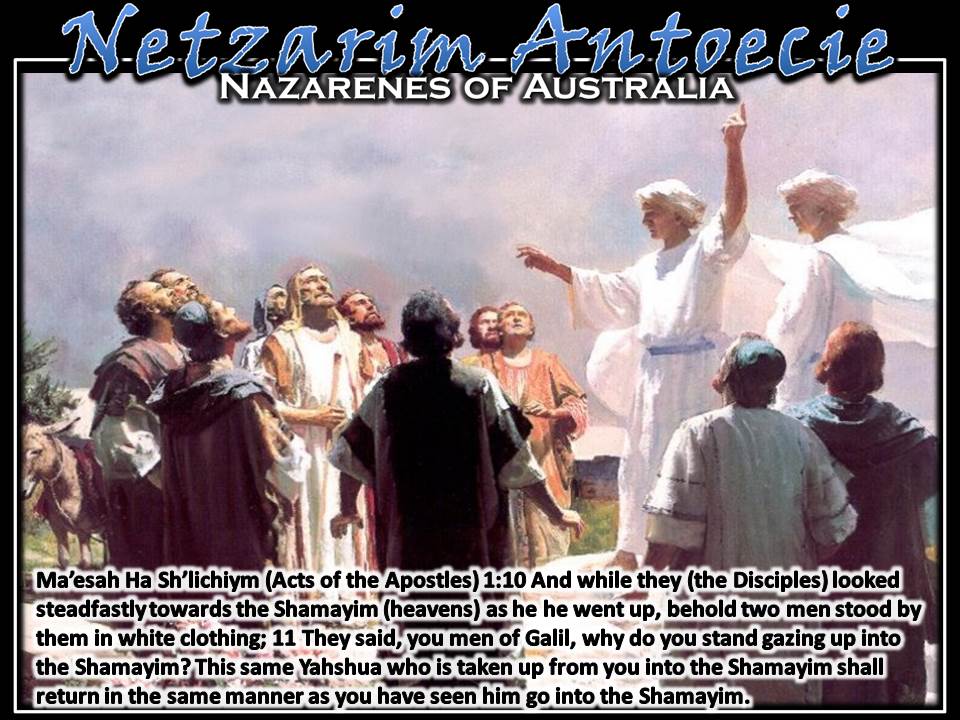
Ma’esah Ha Sh’lichiym (Acts of the Apostles) 1:10 And while they (the Disciples) looked steadfastly towards the Shamayim (heavens) as he he went up, behold two men stood by them in white clothing; 11 They said, you men of Galil, why do you stand gazing up into the Shamayim (Heavens)? This same Yahshua who is taken up from you into the Shamayim shall return in the same manner as you have seen him go into the Shamayim. 

A further quote revealing the significance of the Mount of Olives is given through the Prophet ZekarYah (Zechariah) showing just how central to the theme of Scripture is this Mount:

ZekarYah (Zechariah) 14:4 And in that day His feet shall stand upon the Mount of Olives which faces Yerushalayim on the east and the Mount of Olives shall split in two from east to west, a very great valley and half of the mountain shall move towards the north and half of it towards the south.

Summary Points

When looking into the Mystery of the Mount of Olives we find its significance through much of Scripture so we need to consider how it played and will play a great role until Yahshua’s return as the ruling King so we need to draw some point of significance:

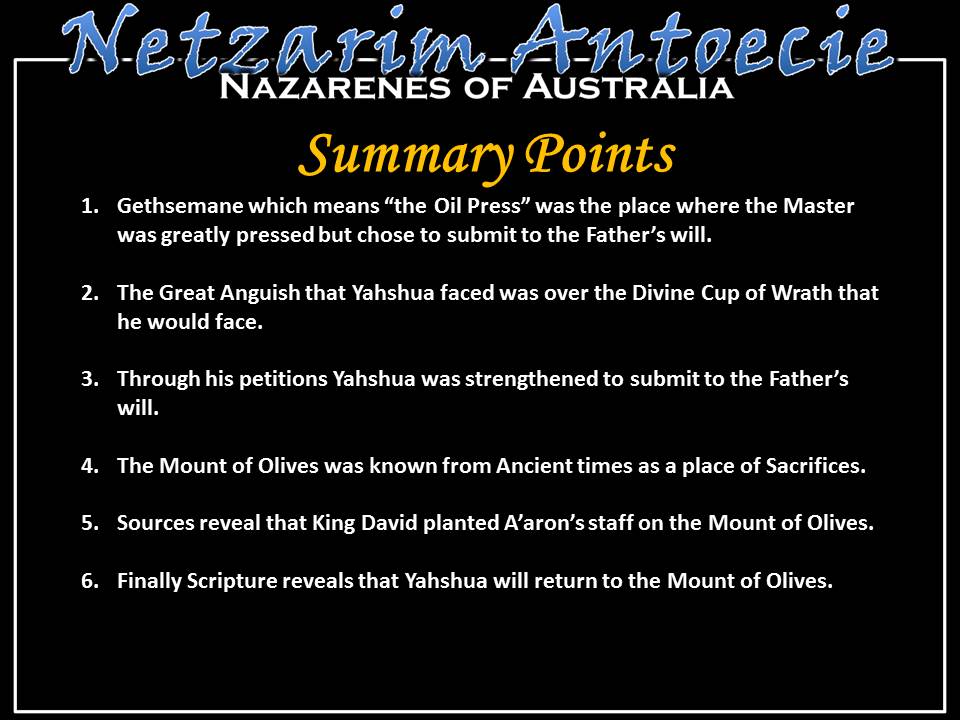
  1. Gethsemane which means “the Oil Press” on the Mount of Olives was the place where the Master was greatly pressed but chose to submit to the Father’s will.

  2. The great anguish that Yahshua felt that caused his sweat to be like drops of blood were not the result of the fear of men but over the Cup of Divine Wrath that he endured for our sins and that of all mankind.

  3. In Yahshua’s petitions we see him progressively overcoming his human will and strengthening his confidence to submit totally to the Father’s will & purpose.

  4. We also have discovered that the Mount of Olives was revealed as a place of sacrifices from early times. Abraham built an Altar there and called on the Name of YHWH.

  5. Sources reveal that King David planted A’aron’s staff on the Mount of Olives that would later be the tree upon which the Saviour would be impaled on a crossbeam.

  6. Finally Scripture reveals that Yahshua will return to the Mount of Olives which will split in two so he can enter Yerushalayim through the Eastern gate as the Messiah and Ruling King.

Conclusion:

As we consider & celebrate Passover I pray we consider the extreme Cup that the Saviour took for us and all those who would come to receive his promise and that we would begin to see how undeserving we really are. When we humble ourselves in considering his suffering it is an opportunity for us to consider if our life was worthy of the great suffering that he received for us.

Ibrim (Hebrews) 12:3-4 For consider him who endured such opposition from transgressors against himself lest you be wearied and lose heart. 4 In your struggle against sin, you have not yet resisted to the point of shedding blood.


PDF Downloads

PDF Download

Donations

Comment